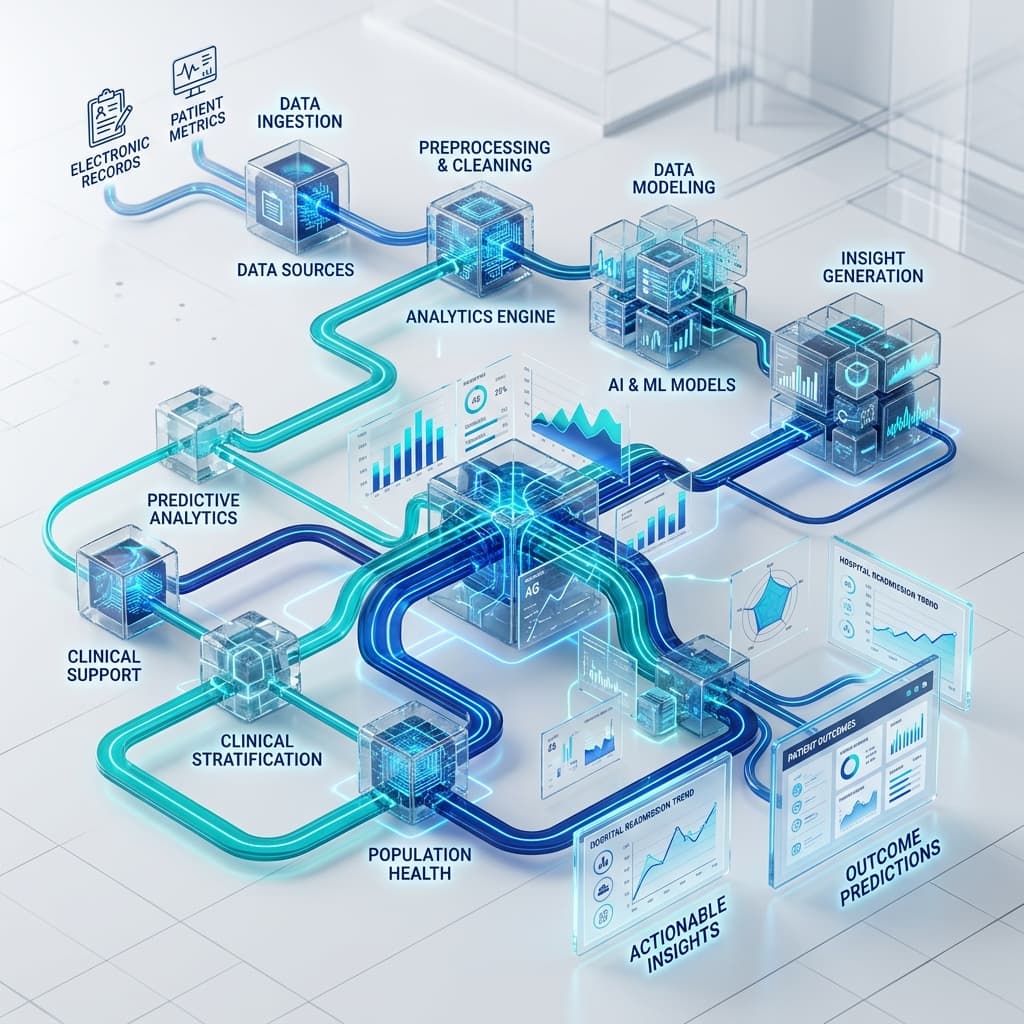
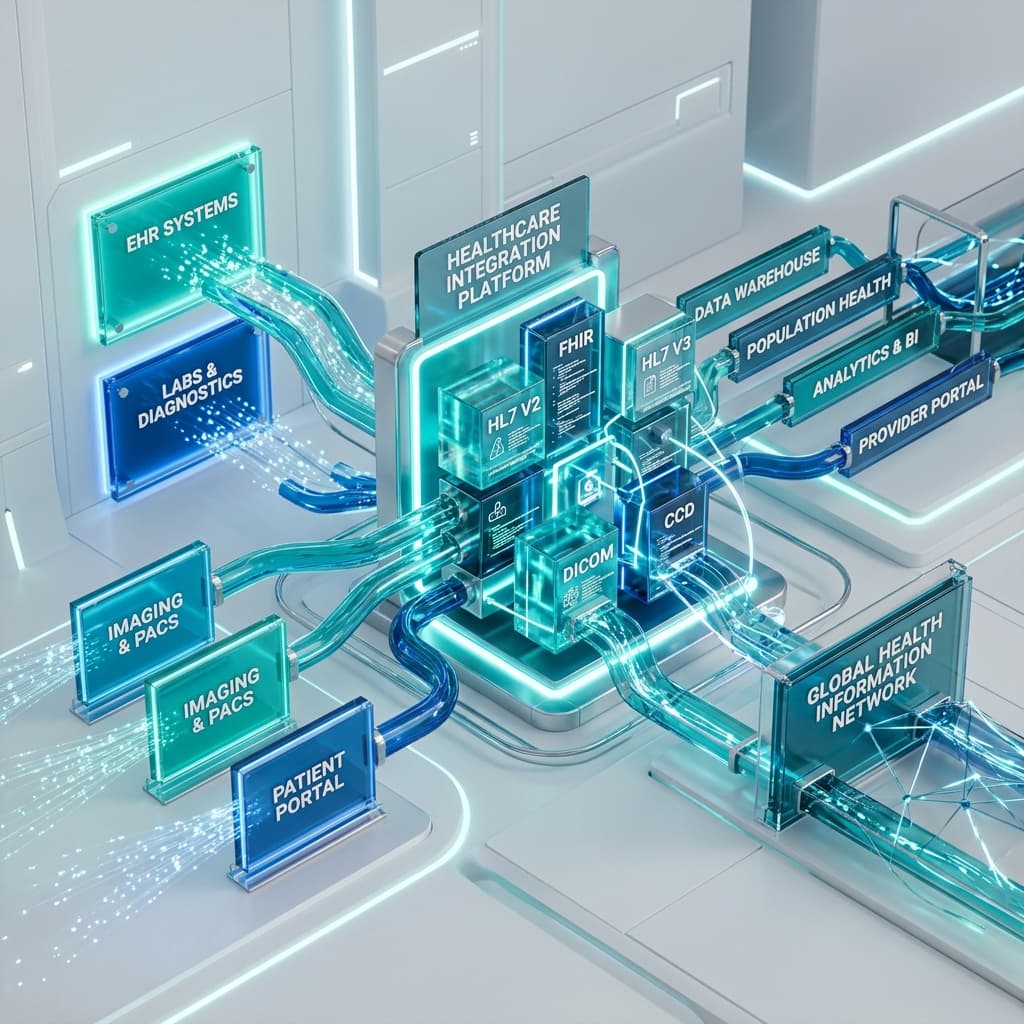
In 2026, healthcare integration is no longer just about moving data from point A to point B. It's about making that data ready for artificial intelligence. Traditional HL7 V2 feeds are being augmented by real-time FHIR streams that power clinical decision support and administrative automation.
The Shift from Data Pipes to Intelligence Streams
For decades, integration was the 'plumbing' of healthcare. Today, it's the nervous system. We're seeing a shift where integration engines like Mirth Connect are being used as preprocessing layers for Large Language Models (LLMs). This involves normalizing unstructured data and ensuring it's contextually relevant before it ever hits an AI inference engine.
Real-time FHIR and Smart on FHIR
The adoption of FHIR R4 (and now R5) has enabled AI to interact with EHRs in a standard way. Instead of batch processing, we're building event-driven architectures where an AI model can 'subscribe' to patient updates and provide immediate feedback to clinicians.
What Integration Teams Should Focus On
- Data Quality: AI is only as good as the data it consumes. Integration teams must prioritize data cleaning at the source.
- Latency Reduction: AI-driven clinical alerts require low-latency pipelines.
- Security: Ensuring PHI is redacted or encrypted before being processed by cloud-based AI services.